How to Choose a Foldable Fuel Bladder for Marine and Industrial Fuel Storage?
Choosing a fuel bladder only by price can create fitting, space, transport, and compatibility problems after production starts.
To choose a foldable fuel bladder, I first confirm the fuel type, capacity, available space, final filled shape, valve layout, connector type, quantity, destination, and real application scenario before recommending material and specifications.
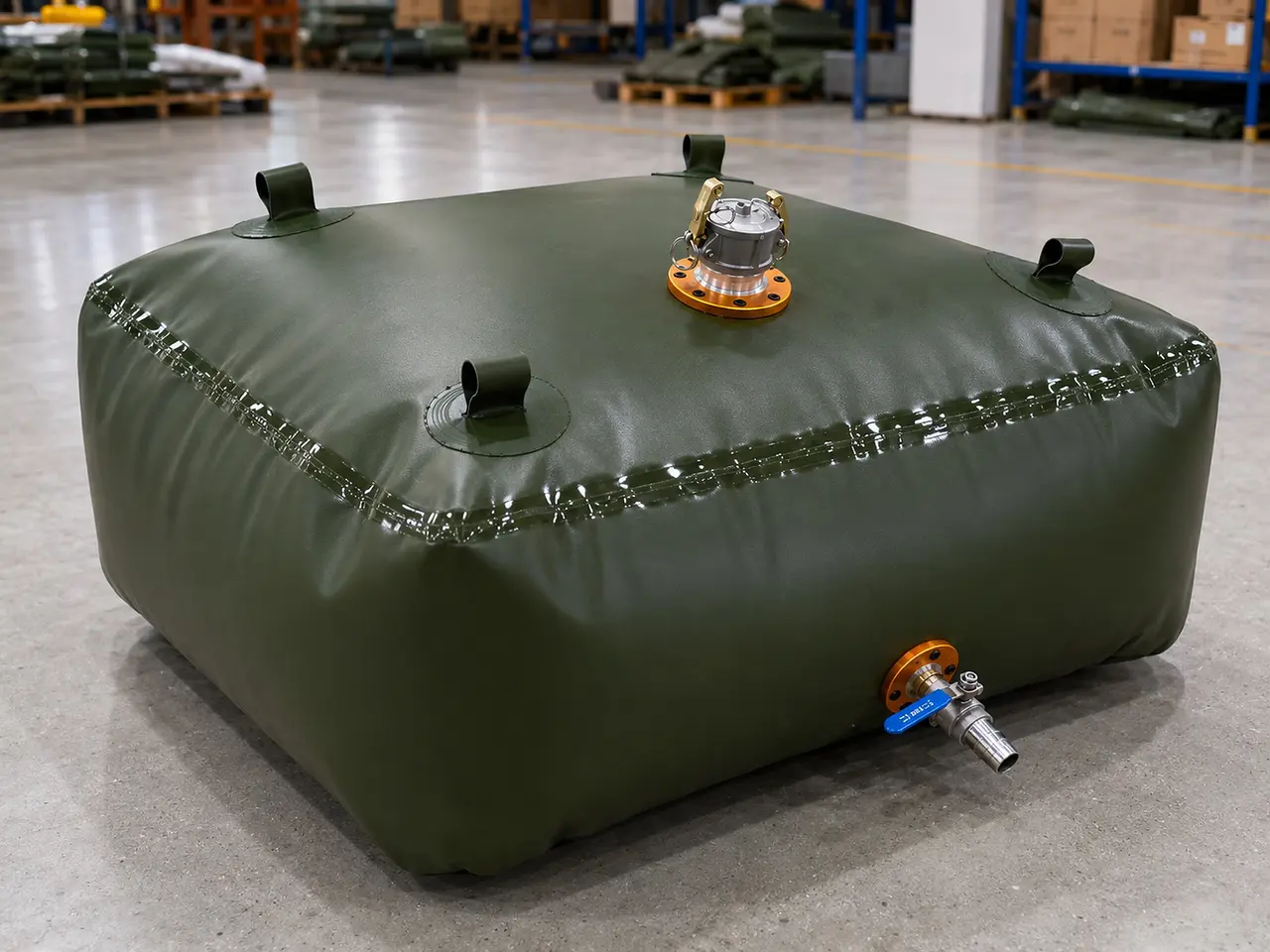
In my experience, most serious buyers are not simply looking for a cheap fuel container. They are trying to solve a real fuel storage, transport, backup, or equipment-support problem. That is why I do not start from the lowest price. I start from the real application. For buyers comparing flexible fuel storage options, our custom fuel bladders page can help show the related product category before a detailed quotation.
What fuel type should be confirmed before ordering a foldable fuel bladder?
Many buyers say “fuel,” but that word is too general for production. The wrong assumption can affect material selection and fittings.
Before ordering a foldable fuel bladder, buyers should clearly confirm whether the stored liquid is diesel, gasoline, fuel oil, or another fuel type, because material compatibility and valve selection depend on the actual liquid.
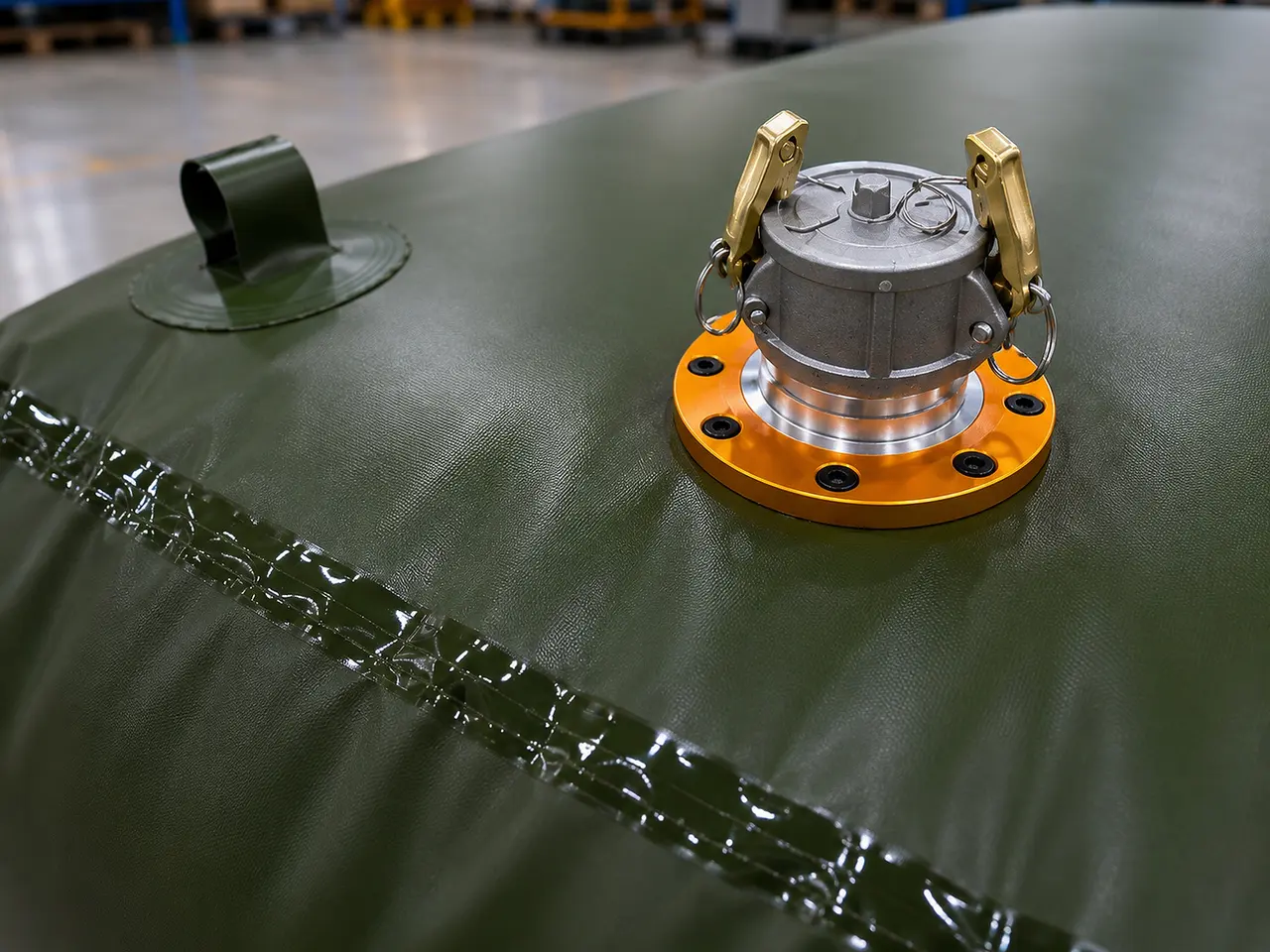
Why the word “fuel” is not enough
When a buyer sends me an inquiry that only says “fuel bladder,” I usually ask one question first: what fuel will be stored? Diesel, gasoline, fuel oil, and other fuel-related liquids may require different material considerations. A foldable fuel bladder is not only a bag with valves. It is a flexible storage system, and the stored liquid affects the material structure, welding approach, valve material, and long-term use expectation.
For marine users, the fuel bladder may be used as auxiliary fuel storage for a boat or yacht. For industrial users, it may support generators, field equipment, agricultural machines, mining projects, or emergency backup. These situations are very different. The same nominal capacity may not mean the same specification.
How I turn fuel type into a production specification
At Bancy Solutions, I treat this as specification-matching work. I need to understand not only the liquid name but also how the bladder will be used, filled, discharged, moved, and packed.
| Buyer information | Why I ask for it |
|---|---|
| Fuel type | Helps confirm material direction and compatibility discussion |
| Application | Marine, generator backup, field project, agriculture, mining, or emergency use |
| Storage duration | Temporary storage and longer storage may require different expectations |
| Filling method | Affects inlet valve size and connector selection |
| Discharge method | Affects outlet position, outlet valve, and quick connector choice |
A useful inquiry is not “Price for fuel bladder?” A better inquiry is: “We need custom diesel fuel bladders for generator backup use. Each unit is 1000L. Please recommend material and fittings.” That gives me enough direction to continue the quotation properly.
How do capacity, dimensions, and final filled shape affect real-world use?
Only asking for liters can be misleading. A flexible bladder changes shape after filling, especially when space is limited.
Buyers should confirm both capacity and available installation space because a foldable fuel bladder does not behave like a rigid tank. Its final filled shape depends on fill level, support surface, dimensions, and surrounding limits.
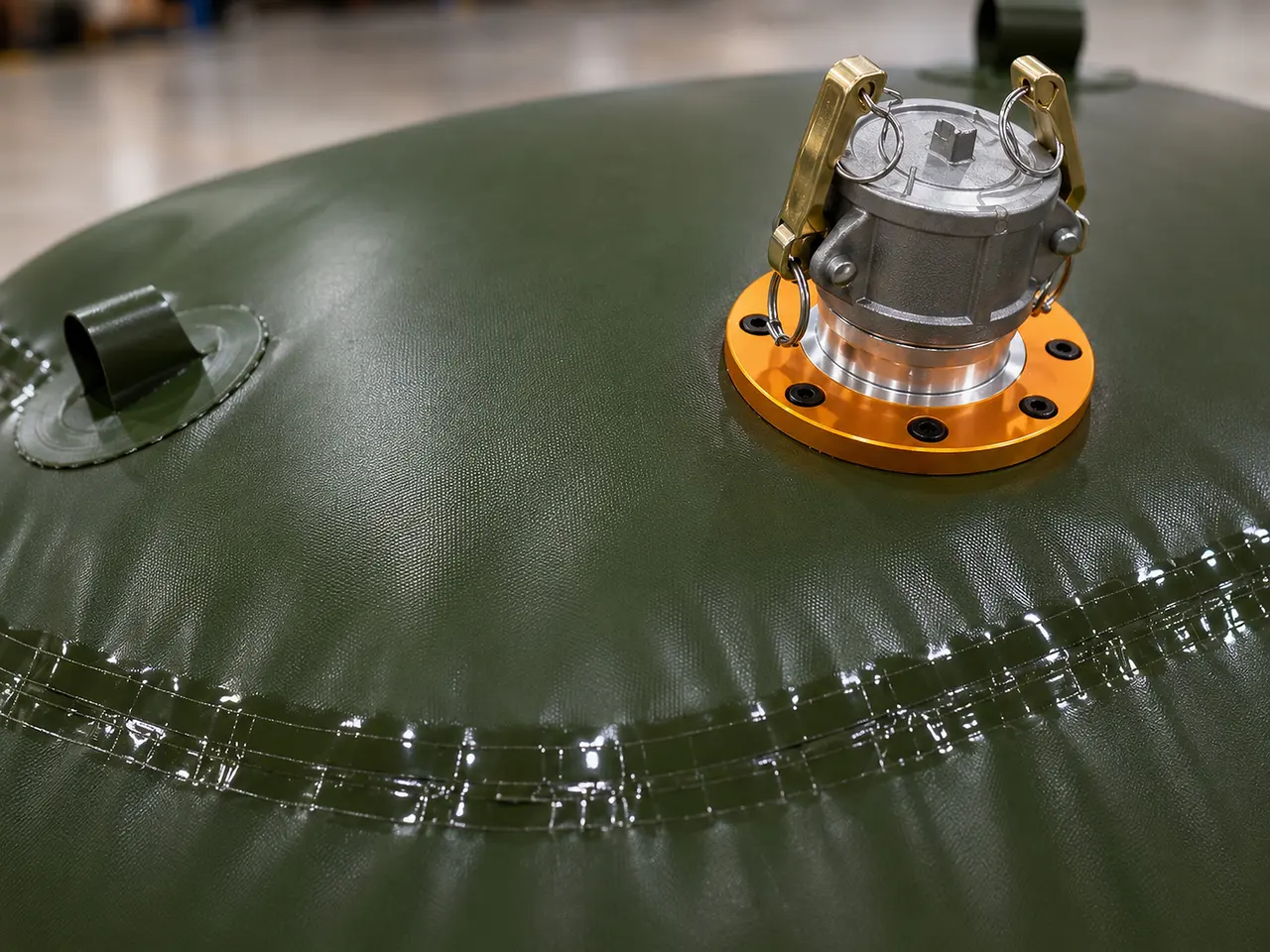
Why liters alone can mislead the buyer
I often receive inquiries that only mention capacity, such as “500L,” “1000L,” or “5000L.” Capacity is important, but it is not enough. A flexible bladder expands according to its design size, fill level, ground surface, and nearby restrictions. If the buyer wants to place the bladder inside a boat compartment, under equipment, inside a metal frame, or on a truck bed, then the available length, width, and height become just as important as the capacity.
For marine and industrial projects, I normally ask the buyer to provide the maximum available space. If the space is narrow, long, shallow, or irregular, we may need to adjust the bladder dimensions instead of simply using a standard shape. This is especially important for custom fuel bladders used with existing equipment.
How usable space changes the quotation
A 1000L fuel bladder for open ground use may be different from a 1000L bladder designed for a limited installation area. The quotation is affected by size, material usage, welding length, fittings, packing volume, and sometimes additional handles or reinforcement.
| Item to confirm | Practical reason |
|---|---|
| Nominal capacity | Defines the approximate storage requirement |
| Maximum length | Helps avoid over-size production |
| Maximum width | Important for narrow decks, frames, or vehicle spaces |
| Maximum height | Critical when the bladder is placed under cover or inside a compartment |
| Support surface | Smooth floor, deck, groundsheet, frame, or container space |
| Fill level expectation | Helps buyers understand the final shape better |
In my experience, serious B2B buyers get a faster and more accurate answer when they send capacity and available space together. For example: “We need 20 pcs 1000L diesel bladders. Maximum available space is 2.2m x 1.2m x 0.45m. The bladder will be used on a marine support vessel.” This is much more useful than capacity alone.
Which fittings should buyers confirm: inlet valve, outlet valve, camlock, or quick connector?
A fuel bladder fitting is not a small accessory. It controls filling, discharge, connection, and real usability on site.
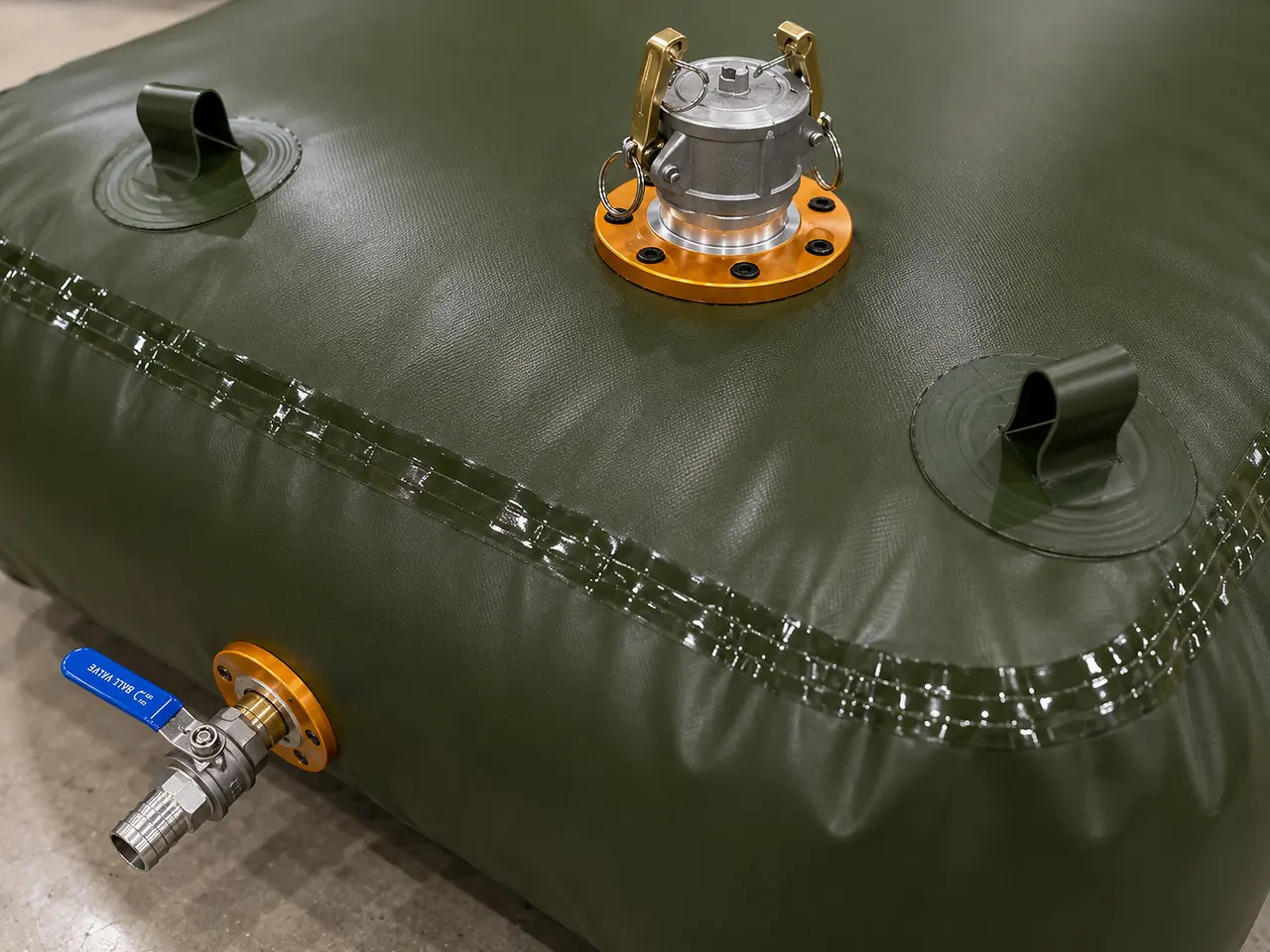
Buyers should confirm inlet size, outlet size, valve material, camlock type, quick connector type, outlet position, and connection method before production, because fittings directly affect installation and operation.
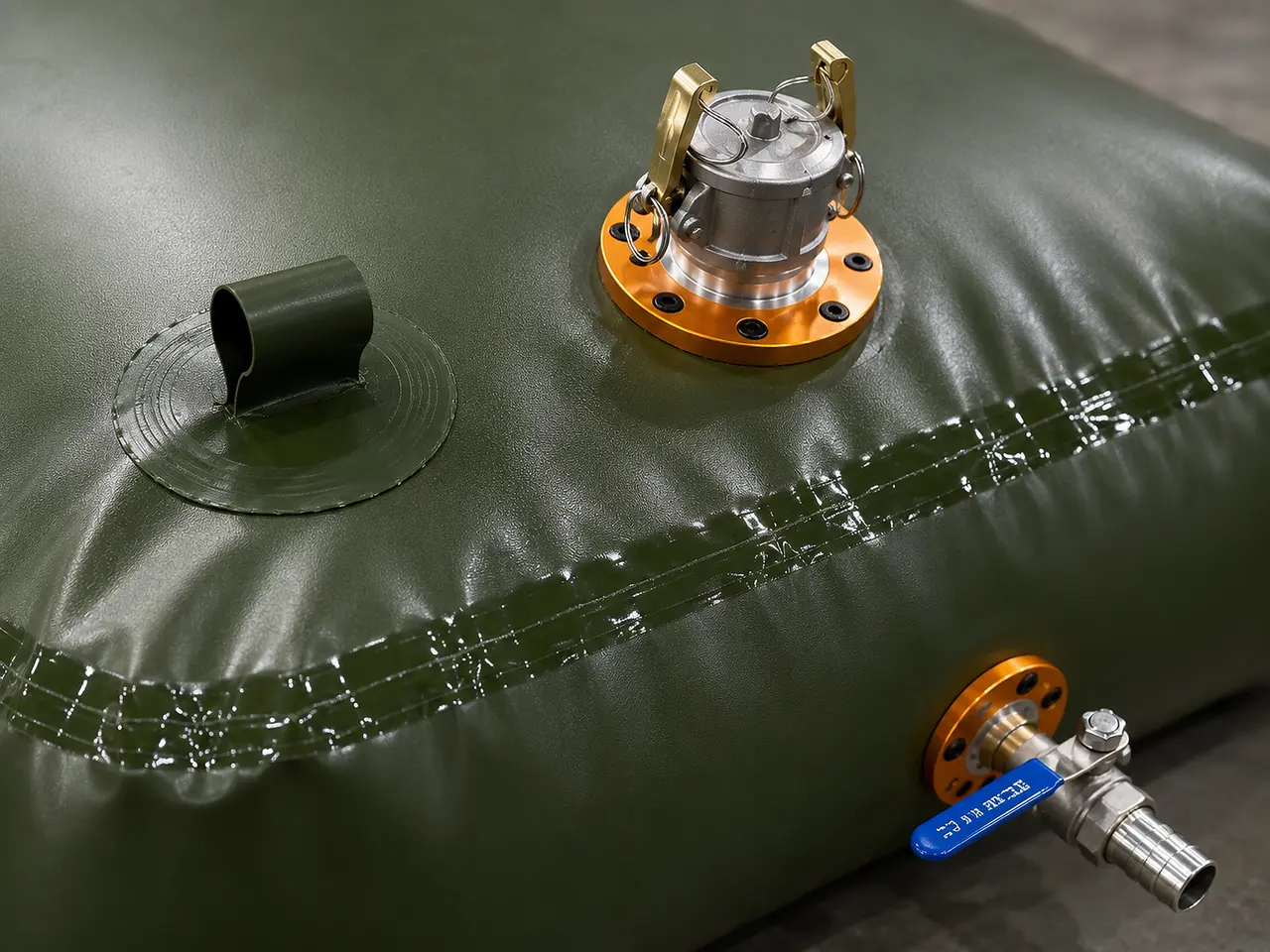
Why fittings are part of the system
When I review a custom foldable fuel bladder inquiry, I pay close attention to fittings. Some buyers focus heavily on capacity and material but forget the valve system. In actual use, however, the bladder must connect with pumps, hoses, generators, engines, tanks, or other equipment. If the valve size or connector type is wrong, the bladder may arrive but still cannot be used smoothly.
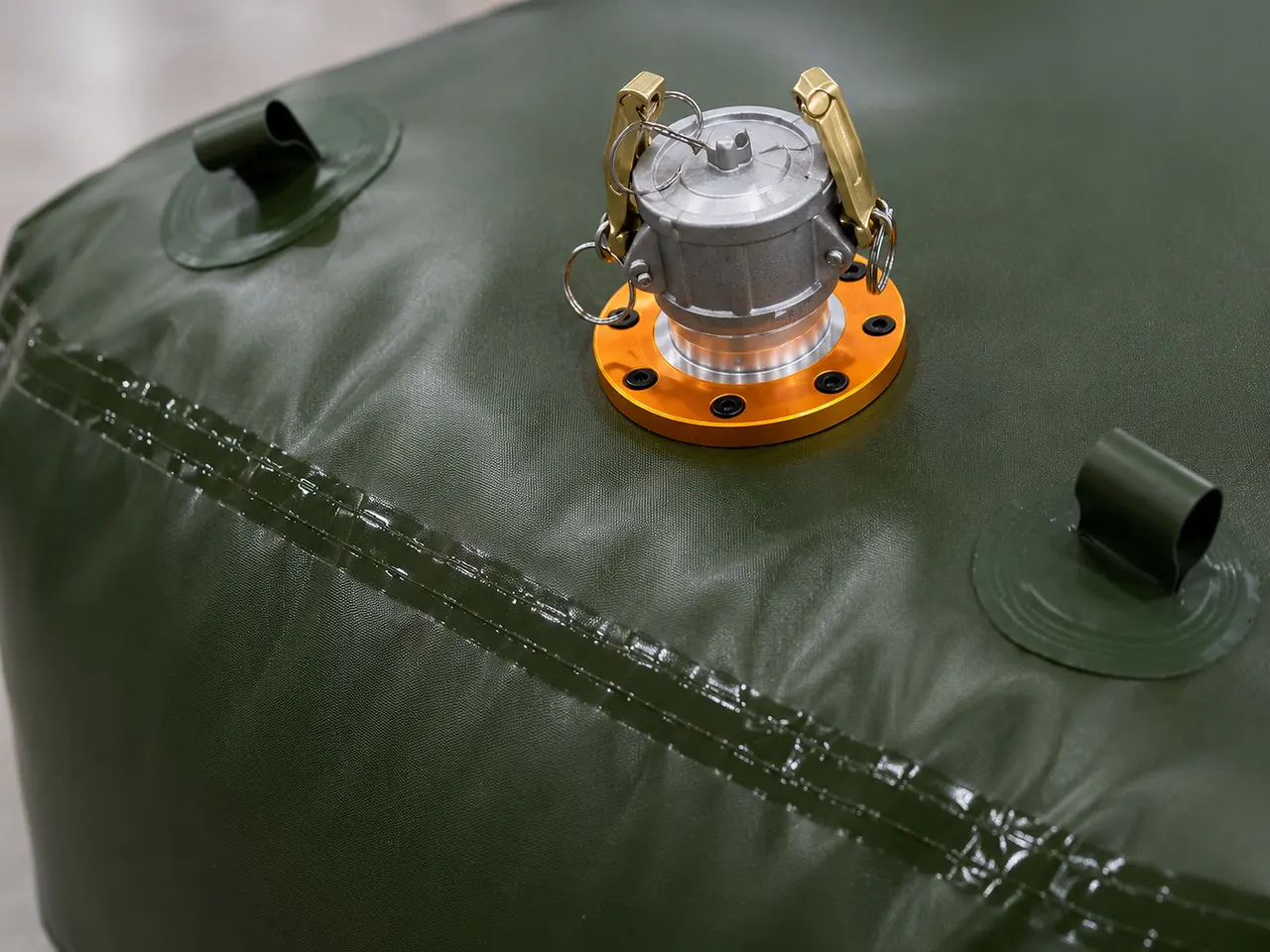
For many marine and industrial buyers, common requirements may include a larger inlet valve for faster filling, a stainless steel outlet ball valve for controlled discharge, an aluminum flange, a camlock inlet, or a C-type or F-type quick connector outlet. The exact choice depends on the buyer’s hose, pump, and equipment connection.
Where custom valves and connectors add value
At Bancy Solutions, I normally ask the buyer to confirm the inlet and outlet separately. The inlet is usually related to filling speed and hose connection. The outlet is related to fuel delivery, flow control, and equipment connection. The outlet position also matters because flexible bladders do not have the same rigid structure as metal tanks.
| Fitting detail | What the buyer should confirm |
|---|---|
| Inlet size | 2 inch, 3 inch, or other required size |
| Outlet size | 1/2 inch, 3/4 inch, 1 inch, or project-specific size |
| Valve material | Stainless steel, aluminum, or other suitable option |
| Connector type | Camlock, quick connector, threaded connection, or customized connector |
| Outlet position | Top, side, end, or specific location based on use |
| Handle position | Helpful for handling, moving, or installation |
A good inquiry may say: “Required fittings: 2 inch camlock inlet, 1 inch stainless steel outlet ball valve, C-type quick connector, outlet on the short side.” This kind of information helps us reduce back-and-forth communication and prepare a more realistic quotation.
Why are welding strength and material compatibility more important than low price?
A low unit price can become expensive if the material, welding, or fittings are not suitable for the real fuel application.
For commercial fuel storage, buyers should compare material compatibility, reinforced seams, welding quality, valve structure, and production confirmation instead of choosing only the lowest price.
Why the lowest price can become expensive
For B2B buyers, the real cost is not only the product price. The real cost includes communication time, wrong specifications, delayed shipment, unusable fittings, poor matching with the application, and after-sales trouble. A foldable fuel bladder used for marine or industrial fuel storage should be matched to the actual fuel type and use scenario. If the buyer only compares the lowest price, important details may be missed.
In my experience, the cheapest option often looks attractive at the quotation stage, but it may create problems later if the material is not suitable, the seam design is weak, the outlet is in the wrong position, or the connector does not match the buyer’s hose system.
What I check before recommending reinforced seams
I do not claim that every project needs the same structure. Instead, I check the use environment, movement frequency, fill and discharge method, ground condition, and handling requirement. For some projects, buyers may ask for double-layer reinforced seams, stronger welding areas, custom handles, or better valve reinforcement.
| Specification point | Why it matters |
|---|---|
| Material selection | Should be discussed according to fuel type and application |
| Seam structure | Helps improve durability and reduce leakage risk |
| Valve reinforcement | Important where stress may concentrate around fittings |
| Welding quality | Affects long-term practical use and buyer confidence |
| Handling design | Handles and packing affect movement and installation |
| Pre-shipment photos | Product and valve photos help confirm details before dispatch |
I also suggest buyers ask for clear production confirmation before placing an order. This may include final size, capacity, valve layout, connector type, packing method, quantity, and destination. For buyers reviewing other flexible liquid containment products, the industrial product category can also help them compare related options.
What information should buyers provide for an accurate custom fuel bladder quotation?
The faster way to get a useful quotation is not to ask “price?” but to provide the project details clearly.
For an accurate custom fuel bladder quotation, buyers should provide fuel type, capacity, dimensions, available space, inlet and outlet requirements, connector type, quantity, destination country, packing needs, and application scenario.
Why a complete inquiry gets a better answer
When I receive a complete inquiry, I can usually understand the project faster and avoid unnecessary guessing. For custom fuel bladders, a quotation is not only about capacity. It includes material direction, size, valve configuration, accessory selection, production difficulty, packing volume, and shipping discussion. If the buyer only asks “How much is a 1000L fuel bladder?” I may need to ask many follow-up questions before giving a responsible answer.
A complete inquiry helps both sides. The buyer receives a more realistic proposal. We can prepare the correct specification, avoid wrong assumptions, and reduce production risk. This is especially important for distributors, equipment suppliers, and project contractors who may need repeated orders or batch supply.
How clear information helps both sides move faster
I usually recommend buyers send the inquiry in one clear paragraph. It does not need to be perfect, but it should include the key points.
| Information to provide | Example |
|---|---|
| Fuel type | Diesel, gasoline, fuel oil, or other fuel |
| Capacity | 500L, 1000L, 5000L, or custom capacity |
| Dimensions | Required length, width, height, or available space |
| Application | Marine fuel backup, generator support, agriculture, mining, emergency storage |
| Inlet requirement | 2 inch camlock inlet or other size |
| Outlet requirement | Stainless steel ball valve, quick connector, outlet position |
| Quantity | Sample order, batch order, distributor stock, or project quantity |
| Destination | Country, port, city, or delivery address level |
| Packing needs | Carton, woven bag, pallet, or export packing preference |
A strong inquiry example is: “We need 20 pcs custom diesel fuel bladders, 1000L each, for generator backup use. Required fittings: 2 inch camlock inlet and 1 inch stainless steel outlet valve. Destination: Australia.” This is much better than “Price?”
If buyers already have a project requirement, they can send the details through our contact page. I can then review the fuel type, capacity, dimensions, fittings, quantity, destination, and packing needs before preparing a practical quotation.
Conclusion
A good fuel bladder quotation starts with clear fuel type, space, fittings, quantity, destination, and real application details.