Flexible Fuel Bladder: Complete Buyer’s Guide (2026)
When managing liquid energy reserves for commercial projects, choosing the right storage solution is often a critical bottleneck. Traditional rigid tanks demand significant logistical coordination, heavy transport infrastructure, and permanent site preparation. A flexible fuel bladder (often referred to as a collapsible fuel tank) offers a portable, highly durable, and space-efficient alternative. Engineered specifically for remote and demanding environments, these portable fuel storage solutions provide rapid deployment, scalable capacities, and reliable long-term performance.
This comprehensive 2026 guide covers everything industrial procurement managers, engineering contractors, and operational directors need to know. From specifying the correct polymer chemistry to navigating environmental compliance and installation procedures, this guide will help you procure the optimal flexible fuel bladder for your project.
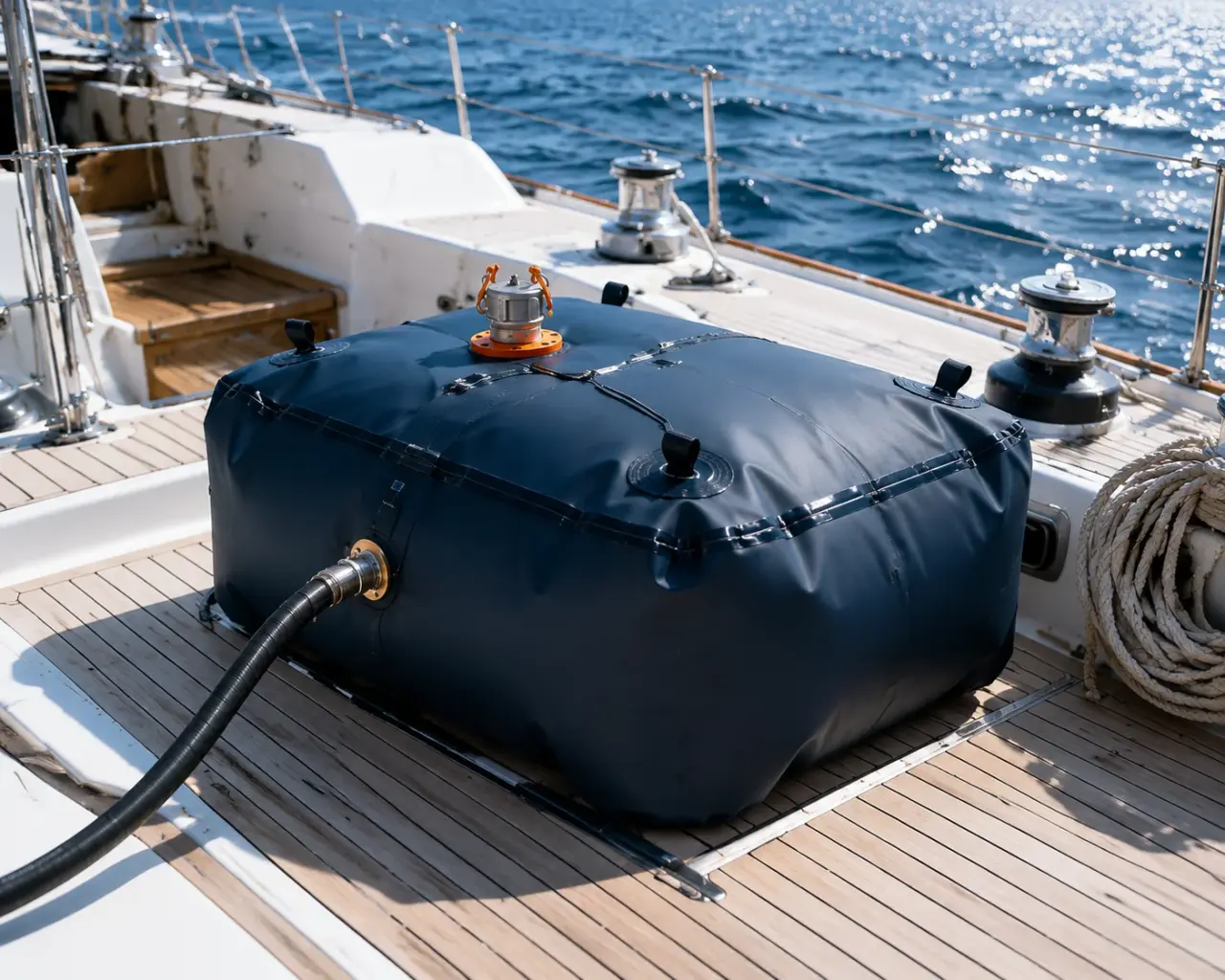
1. What is a Collapsible Fuel Tank?
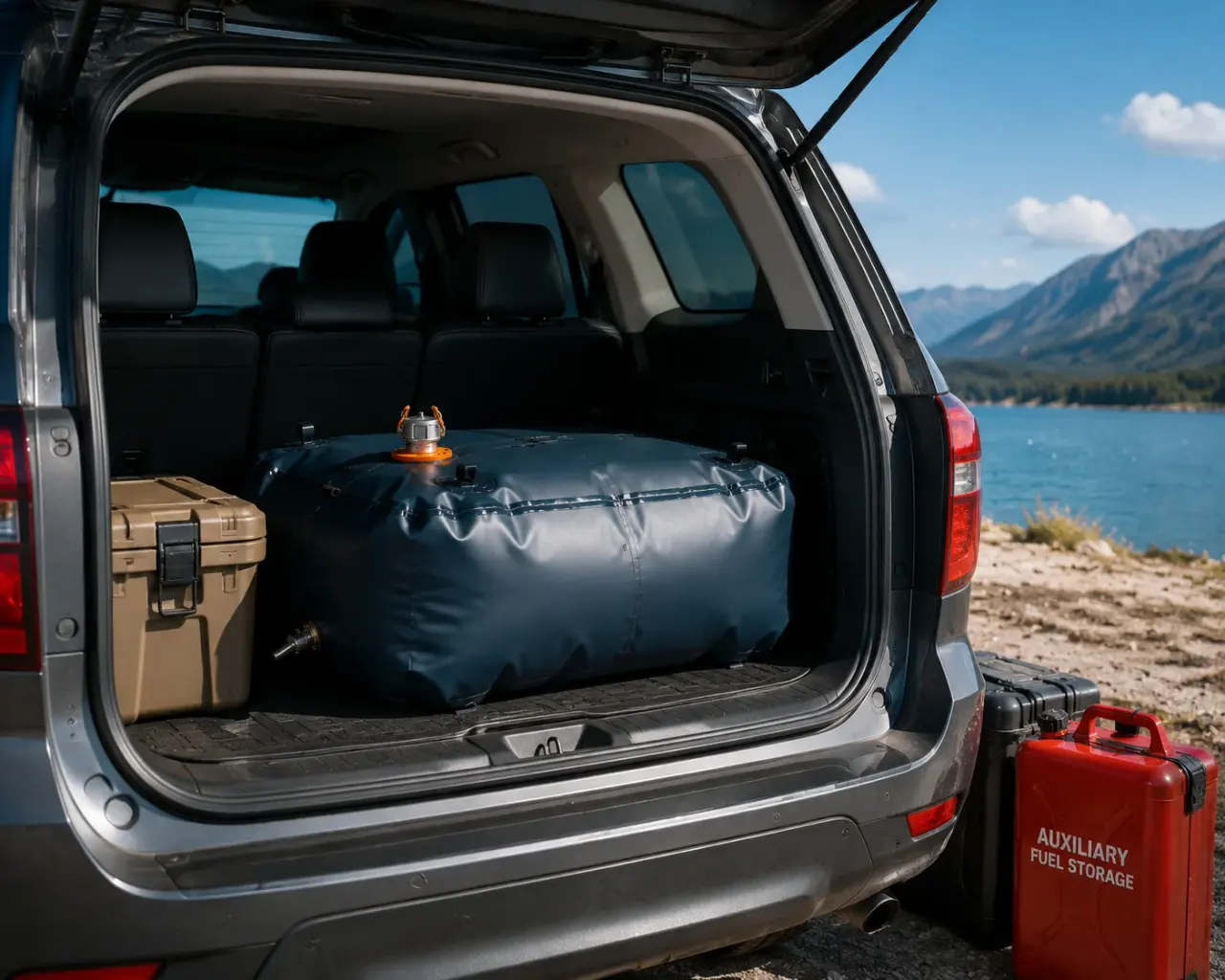
A collapsible fuel tank is a highly engineered, non-rigid fluid container designed for the temporary or medium-term storage of hydrocarbons. Unlike steel or hard plastic (HDPE) tanks, a flexible fuel tank remains completely flat when empty. This dramatically reduces transportation costs and minimizes the storage footprint when the tank is not in active use. As fuel is pumped into the bladder, the flexible fabric expands into a characteristic pillow-like, onion, or rectangular shape.
The Physics of Flexible Storage
One of the core functional advantages of a collapsible structure is vapor suppression. In a rigid tank, as fuel is drawn out, air must enter to displace the liquid volume, creating a vapor space. This vapor space increases the risk of condensation (water entering the fuel) and presents a higher flammability hazard. In contrast, a flexible fuel bladder physically collapses as fuel is drawn from it. This near-zero vapor space significantly mitigates condensation risks and stabilizes the fuel over longer storage periods.
Construction and Engineering
These tanks are not merely “fuel bags.” They are manufactured using specialized, multi-layered coated fabrics and advanced high-temperature welding techniques. The architectural integrity of a professional-grade flexible fuel tank relies entirely on the strength of its seams and the chemical resistance of its base polymer.
2. TPU Fuel Bladder Materials: Polyether vs. Polyester
Selecting the correct material is the most critical decision when ordering a fuel bladder. A common and dangerous mistake in the industry is attempting to use standard PVC (Polyvinyl Chloride) for hydrocarbon storage. PVC is not suitable for fuel storage and should never be used to contain gasoline or diesel. Prolonged exposure to hydrocarbons will rapidly degrade PVC, causing it to harden, crack, and ultimately fail catastrophically.
Instead, professional-grade bladders rely exclusively on Thermoplastic Polyurethane (TPU). TPU offers exceptional mechanical strength, flexibility at extreme temperatures, and outstanding chemical resistance. However, within the TPU family, the specific chemical formulation must match the intended fuel type.
TPU Polyether: Formulated for Gasoline and Aviation Fuel
TPU polyether is specifically engineered to handle lighter, more aggressive hydrocarbons. Gasoline contains a high percentage of aromatic compounds (like benzene and toluene) which aggressively attack many polymers. TPU polyether resists this degradation. Furthermore, polyether-based urethanes exhibit superior hydrolytic stability (resistance to water-induced degradation) and maintain excellent flexibility even in freezing temperatures, making it the premier choice for gasoline, Jet-A aviation fuel, and potable water applications.
TPU Polyester: The Standard for Diesel Storage
TPU polyester is the recognized industry standard for a diesel storage bladder. Diesel fuel is heavier, less volatile, and less chemically aggressive than gasoline. TPU polyester provides robust mechanical strength, unparalleled abrasion resistance, and long-term compatibility with diesel fuel, kerosene, and various industrial lubricants. For heavy machinery operations and commercial transport, TPU polyester offers the best balance of extreme durability and cost-effectiveness.
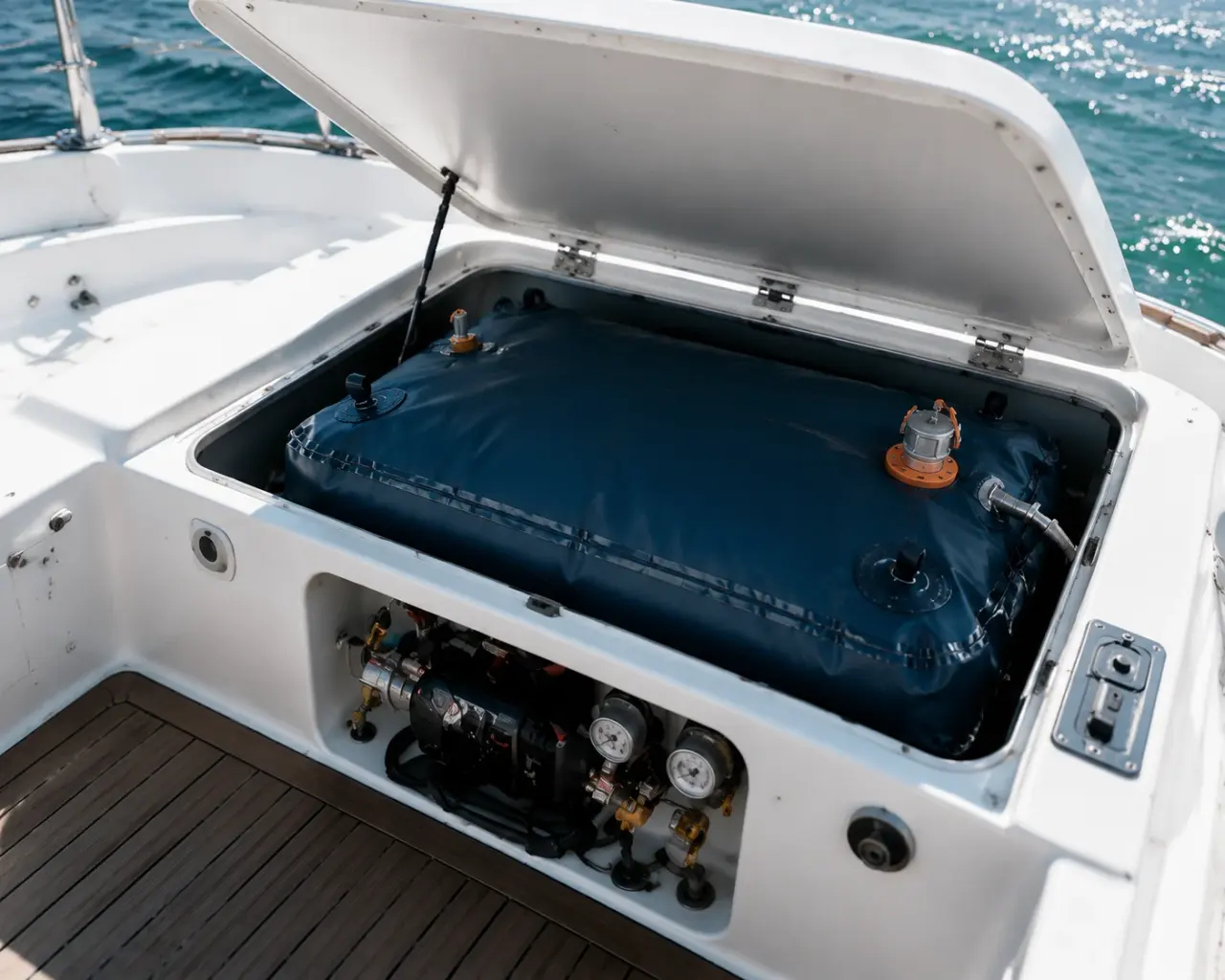
3. Manufacturing Technology: The Double-Layer Welded Fuel Bladder
The integrity of a flexible fuel bladder is defined by its weakest point: the seams. As an experienced custom fuel bladder manufacturer, we understand that standard welding is insufficient for high-volume hydrocarbon storage.
Hot Air Welding vs. High-Frequency Welding
While High-Frequency (HF) welding is sometimes used for specific corner reinforcements or valve bases, the dominant and most reliable process for structural seaming in heavy-duty bladders is Hot Air Welding. This process uses precisely controlled heated air to melt the thermoplastic coating of two overlapping fabric panels while high-pressure rollers immediately fuse them together into a unified, permanent bond.
The Double-Layer Reinforced Seam
To elevate reliability, our premium bladders utilize a double-layer welded fuel bladder technology. After the primary hot-air welded seam is formed, an additional reinforced strip of TPU is welded directly over the exterior (and sometimes interior) of the primary seam.
This double-layer approach provides two critical advantages:
- Mechanical Shear Resistance: It disperses the extreme tensile stress that occurs when a 50,000L bladder reaches maximum capacity.
- Leakage Mitigation: While no industrial system can guarantee absolute zero leakage under catastrophic conditions, this secondary barrier provides a 99% functional seal reliability, offering exceptional peace of mind for critical operations.
Practical Quality Assurance (PQA)
True B2B trust is built on transparent manufacturing, not exaggerated claims. Our process relies on standardized parameter control. Senior technicians with over five years of experience calibrate the temperature, speed, and pressure of the welding machines based on ambient humidity and material thickness. During mass production, we conduct random air-inflation spot checks to physically verify seam stability before any product leaves the factory floor.
4. Rigid vs Flexible Fuel Tank: A Comprehensive Logistics Analysis
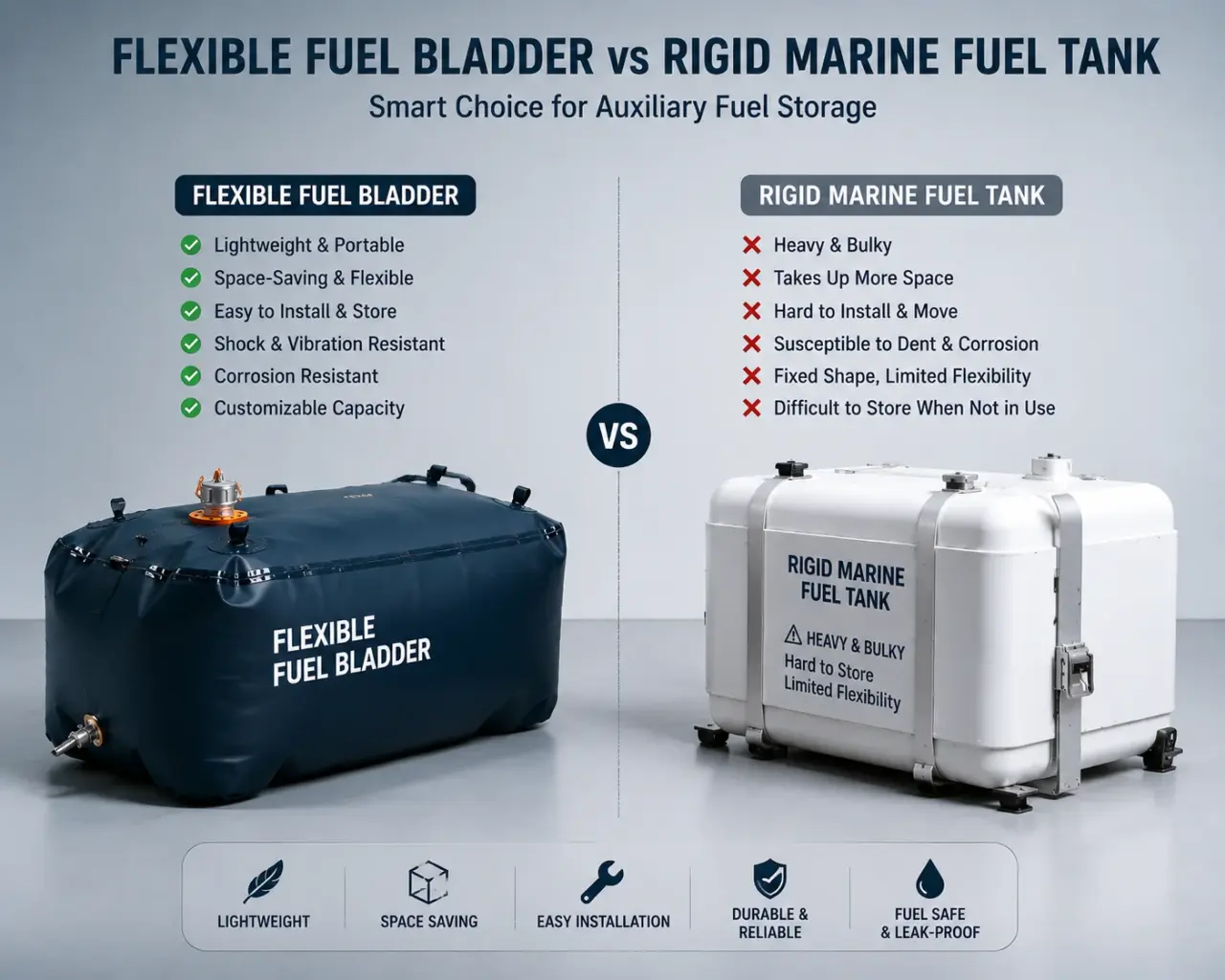
When evaluating a rigid vs flexible fuel tank for your project, the decision extends far beyond the purchase price. A holistic Total Cost of Ownership (TCO) analysis must account for logistics, setup time, and site remediation.
| Evaluation Metric | Rigid Fuel Tank (Steel/FRP) | Flexible Fuel Bladder |
|---|---|---|
| Freight Volume | Ships fully assembled. A 10,000L tank requires a dedicated flatbed truck. | Ships folded. A 10,000L bladder can fit on a standard shipping pallet or in the back of a pickup. |
| Freight Cost | Extremely high, especially to remote islands, mining sites, or mountainous regions. | Low. Can be air-freighted or transported via light vehicles if necessary. |
| Site Preparation | Requires poured concrete pads, heavy cranes, and extensive leveling. | Requires only flat, debris-free ground and a protective ground mat. |
| Deployment Speed | Days to weeks of coordination and installation. | Rapid deployment in under an hour. Unroll, connect fittings, and commence filling. |
| Vapor & Condensation | High risk. Large air volume inside empty space encourages condensation. | Low risk. Bladder collapses as fuel is drawn, preventing air ingress. |
| Post-Project Logistics | Expensive to extract, clean, and transport away from the site. | Can be drained, vented, folded, and transported easily to the next site. |
| Customization | Standardized cylinders or cubes. Custom dimensions are cost-prohibitive. | Highly customizable dimensions to fit irregular deck spaces or tight containment zones. |
5. Key Industry Applications for Flexible Fuel Storage
Flexible fuel bladders excel in scenarios where permanence is a liability and agility is an asset.
Marine and Offshore Operations
Deck space on marine vessels, barges, and offshore platforms is always at a premium. A portable marine fuel bladder allows maritime operators to significantly extend their operational range during long voyages or remote assignments. They can be custom-dimensioned to fit specific deck contours. Once the auxiliary fuel is consumed, the bladder can be rolled up and stowed below deck, immediately freeing up valuable workspace for operations or cargo.
Mining, Construction, and Civil Engineering
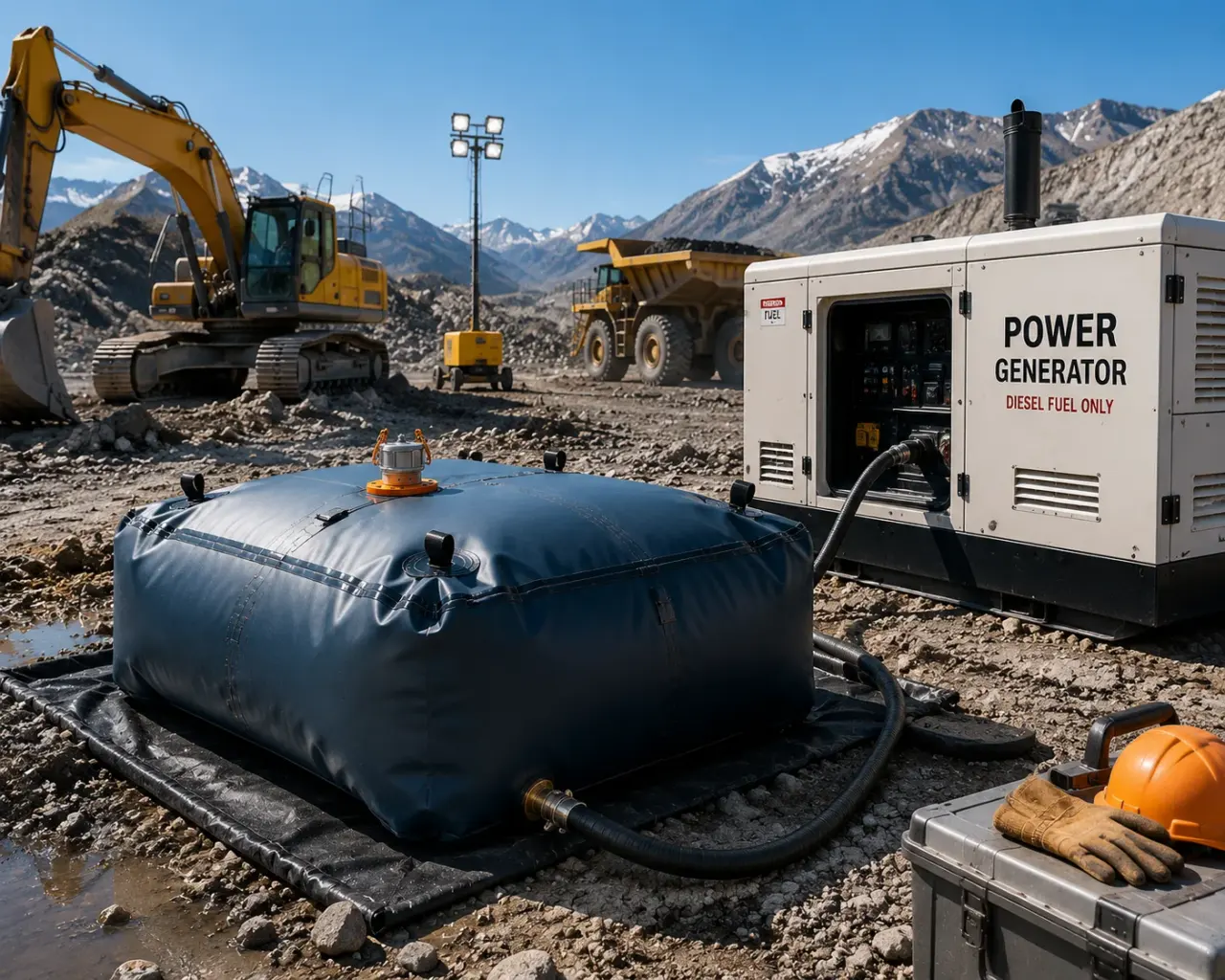
Remote excavation sites require uninterrupted fueling for heavy earth-moving machinery. Constructing a permanent steel fuel farm is often impossible or economically unviable for a project lasting only 6 to 12 months. A modular 500L diesel fuel bladder or a heavy-duty diesel fuel bladder tank provides direct, on-site fueling capabilities to excavators, bulldozers, and generators. When the mining face moves, the fuel bladder can be drained and relocated with minimal downtime.
Emergency Response and Military Deployment
During disaster relief (hurricanes, earthquakes) or rapid-deployment military missions, the establishment of a reliable energy supply is the first logistical hurdle. Military-style flexible fuel tanks are designed for austere environments. They can be flown in via cargo plane, dropped at the forward operating base, and deployed by a small team within minutes to support diesel generators and vehicle fleets.
Transformer Oil and Dielectric Fluid Storage
Beyond combustible fuels, specially configured bladders, such as a TPU pillow fuel bladder tank, are essential during the maintenance, repair, or upgrading of high-voltage electrical substations. When a massive transformer needs servicing, tens of thousands of liters of dielectric mineral oil must be temporarily drained and stored securely to prevent contamination before being pumped back into the unit.
6. Essential Components and Industrial Fittings
A custom flexible fuel bladder is a complete fluid management system, and its reliability is heavily dependent on its hardware. We equip our products with industrial-grade fittings designed for high-flow transfer and maximum durability.
- Flanges: We utilize heavy-duty aluminum flanges for fuel applications. Aluminum provides excellent strength-to-weight ratio and avoids the sparking risks associated with certain ferrous metals.
- Valves: Stainless steel ball valves are the standard for hydrocarbon flow control. They resist corrosion, tolerate harsh environmental exposure, and provide a secure, positive shut-off.
- Inlet/Outlet Connections: For rapid coupling and uncoupling during fueling operations, inlet connections typically utilize standard Camlock fittings. Outlets may feature C-type or F-type quick connectors, ensuring compatibility with standard industrial hoses and transfer pumps.
- Pressure Relief / Venting: Automatic pressure relief valves and manual air vents are critical to safely manage off-gassing and prevent over-pressurization during filling or in extreme heat.
Custom Fittings & Hardware
Need specific flange sizes, stainless steel valves, or Camlock connectors? Tell us your exact hardware requirements and our engineering team will configure a fuel bladder to match your transfer system.
Request a Quote7. Environmental Protection: The Critical Role of Secondary Containment
When storing hydrocarbons in industrial volumes, environmental stewardship is not optional—it is a regulatory requirement. In jurisdictions enforcing the SPCC (Spill Prevention, Control, and Countermeasure) rule or similar EPA directives, all bulk fuel storage must feature a secondary containment system capable of holding the volume of the primary container plus an allowance for precipitation.
Because flexible fuel bladders are often deployed in temporary or remote locations without permanent concrete bunds, operators must utilize portable secondary containment. Deploying a customized PVC/TPU spill berm around the fuel bladder creates a highly secure, regulatory-compliant protective barrier. These berms feature raised walls (often supported by aluminum angles or inflatable air chambers) that instantly capture any accidental spillage during hose transfer or in the unlikely event of a primary bladder compromise.
8. Site Preparation and Installation Guide
While the deployment of a flexible fuel tank is highly efficient, adhering to a strict installation protocol is paramount to ensure the longevity of the bladder and the safety of the site.
- Site Selection and Ground Preparation: Choose a location that is completely level and stable. The ground must be meticulously cleared of all sharp objects, stones, roots, and debris. Rake the area smooth or lay down a bed of fine sand if the native soil is too rocky.
- Deploy the Ground Mat: Always lay down a heavy-duty geotextile or PVC ground mat. This serves as a critical barrier against hidden subterranean punctures and ground abrasion.
- Setup Secondary Containment: Unfold and assemble the portable spill berm over the ground mat. Ensure the berm walls are fully erected and locked into place.
- Unrolling the Bladder: With at least two personnel, lift and carefully unroll the bladder into the center of the containment berm. Never drag an empty bladder across rough surfaces, as this can severely damage the TPU coating.
- Hardware Inspection and Connection: Inspect all aluminum flanges and stainless steel valves to ensure they are tightly secured. Attach the heavy-duty transfer hoses to the Camlock fittings. Ensure all discharge valves are closed.
- Venting: Open the air vent valve to allow trapped air to escape as the fluid enters the bladder.
- Controlled Filling: Commence filling at a low flow rate to ensure the bladder begins to unfold naturally and evenly. Monitor the corners and seams. Do not over-pressurize the tank or attempt to exceed its rated volumetric capacity. Close the air vent only when fuel begins to approach the top surface.
9. Maintenance, Storage, and Lifespan
The operational lifespan of a collapsible fuel storage tank is heavily dependent on environmental factors (particularly UV exposure), operational handling, and maintenance routines. With rigorous care, a premium TPU bladder can serve reliably for many years.
- Routine Inspection: Visually inspect the bladder weekly for signs of abrasion, localized bulging, or minor weeping around the flange gaskets.
- UV Protection: Prolonged exposure to intense ultraviolet sunlight will slowly degrade polymers. If deployed permanently outdoors in a high-UV region (like desert mining sites), consider erecting a simple shade canopy over the bladder to dramatically extend its service life.
- Emptying and Storage: When a project concludes, drain all residual fuel completely using a scavenging pump. Allow the interior to vent and air dry thoroughly. Fold the bladder neatly according to the manufacturer’s original fold lines. Store the folded bladder in a protective transit bag in a cool, dry, dark environment away from rodents and sharp tools.
10. Inquiry Guide: What to Include in Your Custom Request
As a specialized custom flexible fuel bladder tank manufacturer, we do not simply sell off-the-shelf bags; we engineer fluid management solutions. To ensure we provide the perfect custom flexible fuel bladder tank for your specific commercial operation, please include the following precise details in your initial inquiry:
- Exact Liquid Type: Specify the fuel (e.g., Diesel, Gasoline, Jet-A, Kerosene, or Transformer Oil). This absolutely determines the polymer chemistry (TPU polyether vs polyester) we must use.
- Required Capacity: State the total volume needed (in Liters, Gallons, or Cubic Meters).
- Dimensional Constraints: What is the maximum available footprint (Length x Width) at your deployment site or on your vessel deck? We can adjust the aspect ratio to fit tight spaces.
- Hardware and Fittings Needed: Specify your preferred valve sizes and connection standards (e.g., 2-inch or 3-inch standard, Camlock vs Threaded).
- Application Environment: Will this be a static ground installation, or will it be subjected to dynamic movement (e.g., mounted on a truck or marine vessel)? What are the ambient temperature extremes at the site?
- Delivery Destination: Specify the shipping country or port so our logistics team can provide an accurate CIF/DDP quotation.
Project Quotation
For a custom quotation, please provide the required capacity, fuel type, application, dimensional constraints, and destination country. Our team will review the configuration and prepare a suitable offer.
Inquire Now11. Extended Frequently Asked Questions
Are flexible fuel bladders 100% leak-proof? No responsible industrial manufacturer will guarantee absolute zero leakage under all catastrophic conditions. However, our bladders utilize double-layer hot air welding technology specifically engineered to mitigate leakage risks. When correctly installed on prepared ground and operated within specified pressure limits, they provide exceptionally reliable containment.
Can I use a PVC bladder to store diesel or gasoline? Absolutely not. PVC (Polyvinyl Chloride) lacks the necessary chemical resistance to withstand hydrocarbons. Fuel will rapidly degrade the plasticizers in PVC, leading to hardening, cracking, and inevitable failure. You must specify TPU (Thermoplastic Polyurethane) for any fuel application.
What is the difference between TPU Polyether and Polyester? TPU polyester provides superior mechanical abrasion resistance and is the standard for heavier fuels like diesel. TPU polyether offers superior resistance to hydrolytic degradation and is chemically formulated to withstand lighter, aggressive hydrocarbons like gasoline and aviation fuel.
How do you ensure the quality of the welded seams? Our manufacturing process relies on advanced double-layer reinforced hot-air welding. Crucially, the equipment parameters—including precise temperature, nozzle speed, and roller pressure—are calibrated daily by senior technicians based on specific material thickness and ambient humidity. We also conduct random inflation spot checks during mass production to physically verify seam integrity.
How long do collapsible fuel storage tanks last? Lifespan is highly variable. A bladder deployed in a shaded, temperate environment on smooth ground may last 7-10 years. The same bladder fully exposed to harsh desert UV radiation and rough handling may require replacement in 3-5 years. Proper site preparation and UV protection are the keys to longevity.
Can I transport fuel while it is inside a flexible bladder? Yes, but with critical caveats. The bladder must be explicitly designed for transport. Transport bladders require heavy-duty internal baffling to mitigate dynamic liquid surge (sloshing) and must be rigorously secured using specialized heavy-duty tie-down straps. Using a static storage bladder for dynamic transport is extremely dangerous and strictly prohibited.
Do I need a fuel bladder secondary containment system? In almost all commercial, industrial, and municipal applications, yes. Secondary containment, such as a portable spill berm, is typically mandated by environmental regulations (like SPCC guidelines in the US) to capture accidental spills during transfer operations or in the event of a primary containment failure.
What are the temperature limits for a TPU flexible fuel bladder? High-quality TPU materials maintain their flexibility and structural integrity across a broad temperature range, typically functioning reliably from -30°C to +70°C (-22°F to +158°F). If your project involves extreme arctic or desert environments, please highlight this in your inquiry so we can verify polymer suitability.
What happens if the bladder gets a small puncture? Accidental punctures from sharp tools or debris can occur. We supply a standard repair kit with our bladders. Minor punctures and abrasions can be effectively repaired on-site using the provided TPU patches and specialized industrial adhesive, minimizing operational downtime.
What are typical 1000 gallon fuel bladder dimensions? Dimensions are fully customizable. However, a standard static 1000-gallon (approximately 3800L) pillow bladder typically measures around 3.0m x 2.5m x 0.6m when filled to capacity. We can easily adjust the length-to-width ratio to accommodate specific spatial constraints.
Can the same bladder be used for different types of fuel? It is highly discouraged. Switching from diesel to gasoline, for example, is dangerous because residual fuel mixing alters the flash point and performance characteristics of the fuel. Furthermore, the specific TPU formulation optimized for diesel (polyester) may not adequately withstand prolonged exposure to gasoline. Always dedicate a bladder to a single specific fuel type.
Engineering Consultation
Unsure whether you need TPU polyether or polyester? Have strict dimensional limits for a marine vessel or tight containment zone? Contact our engineers directly to discuss your unique project requirements.
Contact Our EngineersRelated Guides
- Flexible Aquaculture Tanks: Complete Buyer's Guide for Fish Farming (2026)
2026 buyer's guide to flexible aquaculture tanks. Compare PVC, steel tube, and steel sheet frame tanks with stocking density, installation, and quotation guidance.